Publications

Medical training in dairy heifers – A pilot study

Training is used in various species to reduce fear responses, ease handling, and improve welfare. This pilot study aimed to (1) design a positive reinforcement training program for dairy heifers, (2) monitor their learning performances and short-term memorization, (3) assess their long-term memory at one-year post-training, and (4) assess their behavior in new handling situations. We used 10 heifers randomly assigned to two treatments. TRAINED heifers (n = 5) underwent a training program including 19 husbandry and veterinary procedures split into 125 steps to be acquired over the course of 20 separate fifteen-minute sessions. The heifers had (median [1–3 quartiles]) 88 [62–100] commands and 80 [45–94] reinforcements per session. We used the ‘clicker training’ technique, with regular heifer concentrate as reinforcement. For each step, we established a learning criterion allowing to move to the next step, and we recorded the number of times the trainer gave the order (i.e. ‘command’) to the heifer and the number of times the heifer performed the correct behavior. CONTROL heifers (n = 5) were simply exposed to the handler’s presence. At one year after training, TRAINED heifers underwent the same procedures, and we recorded how many correct responses they produced out of 5 orders (or ‘commands’), together with a series of three behavioral tests: reaction to a motionless human, avoidance test, and ease-of-handling test. TRAINED heifers successfully learned 4 procedures (‘touching a target with the muzzle’; standing still calmly while being touched with: ‘arm-length glove’, ‘stethoscope’, ‘halter’) in (median) 1 session, 10 procedures (e.g. ‘eating from the hand’, ‘mouth opening and tongue manipulation’, ‘vaginal palpation’) in two sessions, 3 procedures (‘coming when called’, ‘tail lifting’, ‘rectal palpation’) in 3 sessions, and two procedures (‘standing still’, ‘left eyelid manipulation’) in 4 sessions. Results were similar when considering the number of commands required for learning. One year after training, four TRAINED heifers remembered 12–14 procedures, one heifer was able to only perform ‘eating from the hand’, and no heifers were able to perform ‘tail lifting’, ‘rectal palpation’, or ‘vaginal palpation’. At one year after training, TRAINED heifers were quicker to touch a motionless human, have a shorter avoidance distance, and require less time to be moved along the corridor than CONTROL heifers. Heifers can be clicker-trained for a large number of husbandry and veterinary procedures; they can remember most of the procedures one year later. Training may ease further handling.
A consensus on the definition of positive animal welfare

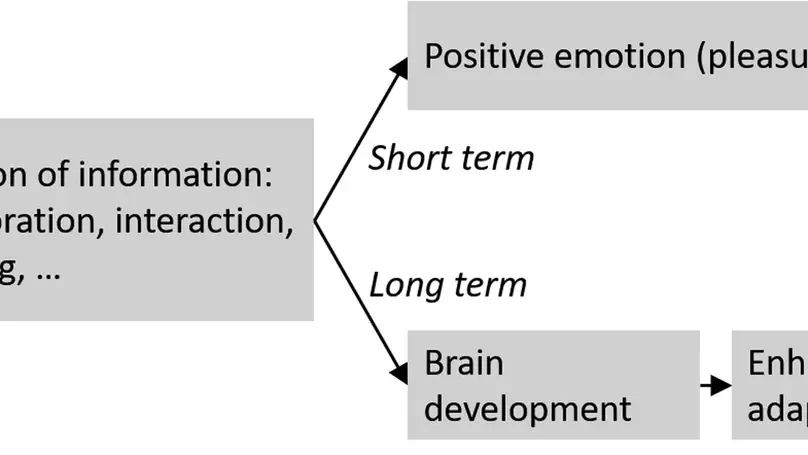
The concept of animal welfare is evolving due to progress in our scientific understanding of animal biology and changing societal expectations. Animal welfare science has been primarily concerned with minimizing suffering, but there is growing interest in also promoting positive experiences, grouped under the term positive animal welfare (PAW). However, there are discrepancies in the use of the term PAW. An interdisciplinary group arrived at a consensus that ‘PAW can be defined as the animal flourishing through the experience of predominantly positive mental states and the development of competence and resilience. PAW goes beyond ensuring good physical health and the prevention and alleviation of suffering. It encompasses animals experiencing positive mental states resulting from rewarding experiences, including having choices and opportunities to actively pursue goals and achieve desired outcomes’. The definition also considers individual and species-specific differences. It provides a framework for researchers to investigate PAW and thereby generate innovative, informative and reproducible science. Studies of PAW can contribute to a richer picture of an animal’s life and may elucidate the biological foundations of happiness. The definition creates opportunities to inspire scientific progress in animal biology and to align animal care practices, legislation and markets with societal expectations.

Horses can learn to identify joy and sadness against other basic emotions from human facial expressions

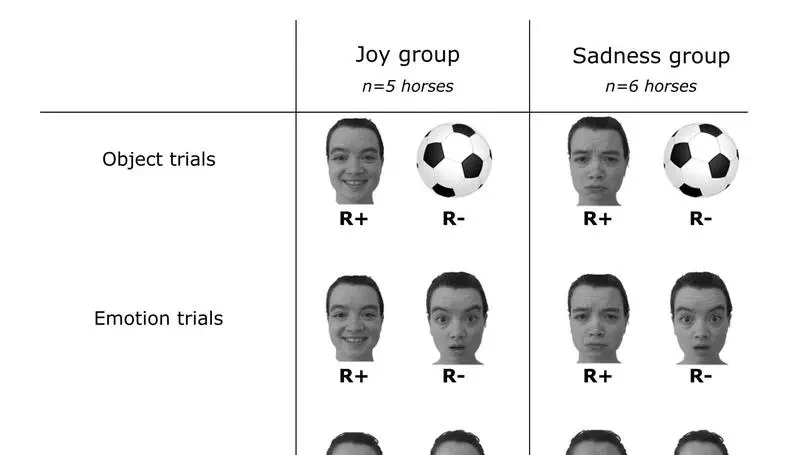
Recently, horses and other domestic mammals have been shown to perceive and react to human emotional signals, with most studies focusing on joy and anger. In this study, we tested whether horses can learn to identify human joyful and sad expressions against other emotions. We used a touchscreen-based automated device that presented pairs of human portraits and distributed pellets when the horse touched the rewarded face. Six horses were trained to touch the sad face and 5 the joyful face. By the end of training, horses’ performances at the group level were significantly higher than chance level, with higher scores for horses trained with the sad face. At the individual level, evidence of task learning varied among horses, which could be explained by individual variations in horses’ ability to identify different human facial expressions or attention issues during the tests. In a generalization test, we introduced portraits of different humans than those presented during training. Horses trained with the joyful face performed better than chance, demonstrating generalization. Conversely, horses trained with the sad face did not. Horses also showed differences in learning performance according to the non-rewarded emotion, providing insights into horses’ cognitive processing of facial expressions.

Sheep (Ovis aries) training protocol for voluntary awake and unrestrained structural brain MRI acquisitions

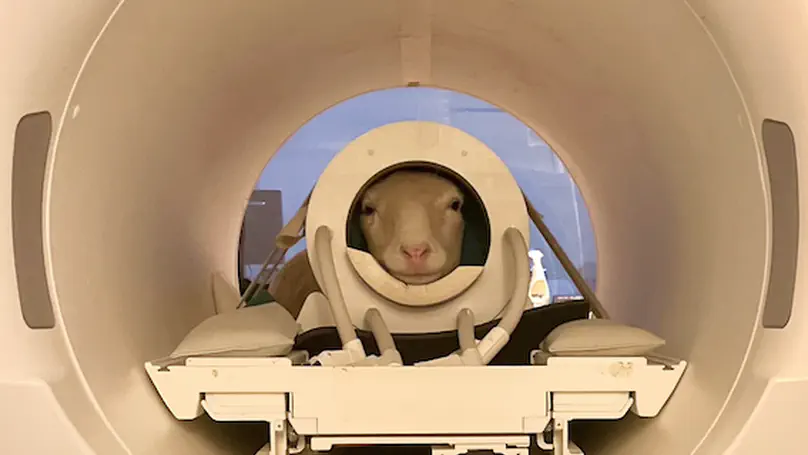
Magnetic resonance imaging (MRI) is a non-invasive technique that requires the participant to be completely motionless. To date, MRI in awake and unrestrained animals has only been achieved with humans and dogs. For other species, alternative techniques such as anesthesia, restraint and/or sedation have been necessary. Anatomical and functional MRI studies with sheep have only been conducted under general anesthesia. This ensures the absence of movement and allows relatively long MRI experiments but it removes the non-invasive nature of the MRI technique (i.e., IV injections, intubation). Anesthesia can also be detrimental to health, disrupt neurovascular coupling, and does not permit the study of higher-level cognition. Here, we present a proof-of-concept that sheep can be trained to perform a series of tasks, enabling them to voluntarily participate in MRI sessions without anesthesia or restraint. We describe a step-by-step training protocol based on positive reinforcement (food and praise) that could be used as a basis for future neuroimaging research in sheep. This protocol details the two successive phases required for sheep to successfully achieve MRI acquisitions of their brain. By providing structural brain MRI images from six out of ten sheep, we demonstrate the feasibility of our training protocol. This innovative training protocol paves the way for the possibility of conducting animal welfare-friendly functional MRI studies with sheep to investigate ovine cognition.

Feeding predictability as a cognitive enrichment protects brain function and physiological status in rainbow trout: a multidisciplinary approach to assess fish welfare

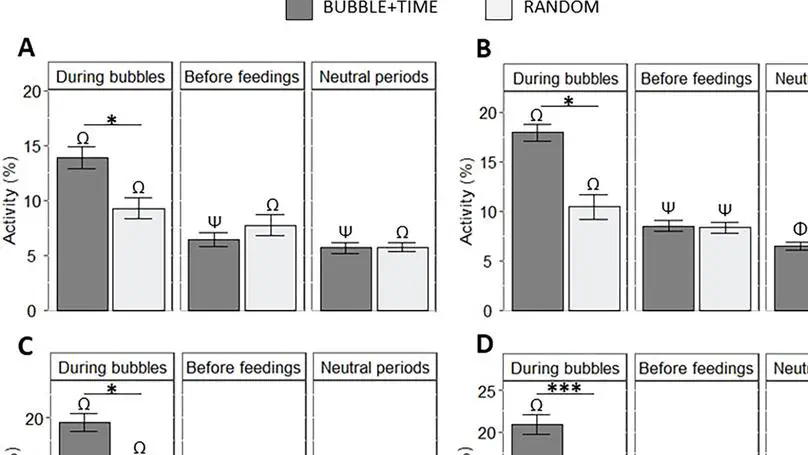
Cognitive enrichment is a promising but understudied type of environmental enrichment that aims to stimulate the cognitive abilities of animals by providing them with more opportunities to interact with (namely, to predict events than can occur) and to control their environment. In a previous study, we highlighted that farmed rainbow trout can predict daily feedings after two weeks of conditioning, the highest conditioned response being elicited by the combination of both temporal and signalled predictability. In the present study, we tested the feeding predictability that elicited the highest conditioned response in rainbow trout (both temporal and signalled by bubbles, BUBBLE + TIME treatment) as a cognitive enrichment strategy to improve their welfare. We thus analysed the long-term effects of this feeding predictability condition as compared with an unpredictable feeding condition (RANDOM treatment) on the welfare of rainbow trout, including the markers in the modulation of brain function, through a multidisciplinary approach. To reveal the brain regulatory pathways and networks involved in the long-term effects of feeding predictability, we measured gene markers of cerebral activity and plasticity, neurotransmitter pathways and physiological status of fish (oxidative stress, inflammatory status, cell type and stress status). After almost three months under these predictability conditions of feeding, we found clear evidence of improved welfare in fish from BUBBLE + TIME treatment. Feeding predictability allowed for a food anticipatory activity and resulted in fewer aggressive behaviours, burst of accelerations, and jumps before mealtime. BUBBLE + TIME fish were also less active between meals, which is in line with the observed decreased expression of transcripts related to the dopaminergic system. BUBBLE + TIME fish tented to present fewer eroded dorsal fin and infections to the pathogen Flavobacterium psychrophilum. Decreased expression of most of the studied mRNA involved in oxidative stress and immune responses confirm these tendencies else suggesting a strong role of feeding predictability on fish health status and that RANDOM fish may have undergone chronic stress. Fish emotional reactivity while isolated in a novel-tank as measured by fear behaviour and plasma cortisol levels were similar between the two treatments, as well as fish weight and size. To conclude, signalled combined with temporal predictability of feeding appears to be a promising approach of cognitive enrichment to protect brain function via the physiological status of farmed rainbow trout in the long term.

Saanen and Alpine goats experience neophobia when offered novel feeds

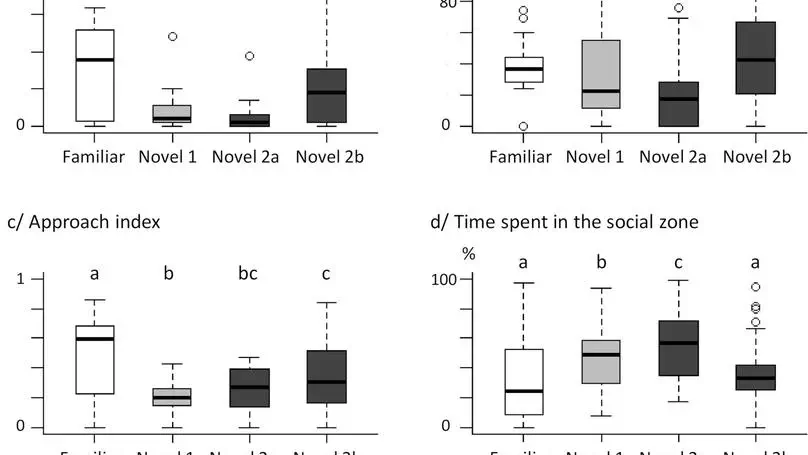
Feed neophobia is a reluctance to eat a novel feed that can last from minutes to days. While it can prevent animals from ingesting toxins, it may also have negative effects on growth and animal welfare. In ruminants, feed neophobia has mainly been studied in sheep and cattle, and only a few studies have focused on goats. This study assessed feed neophobia in goats and aimed to determine whether this is breed-dependent. Six-month-old Saanen (n = 18) and Alpine (n = 13) goats were repeatedly placed in an experimental environment, with a familiar feed, for 5 min per day (days 1–7). The familiar feed was then replaced by two novel feeds on consecutive days (d8-d9), and the second novel feed was offered a second time (d10). Saanen goats habituated better to the situation as, on the last day with the familiar feed, they consumed more, with a greater intake rate, and spent less time near conspecifics than Alpine goats. They also showed a higher approach index than Alpine goats, meaning that they spent more time head in the feed trough while being close to it. Breed however did not influence the behavioural responses of goats when they were exposed to novel feeds. When first exposed to the novel feeds and regardless of their respective palatability, the goats reduced their intake compared to when they received the familiar feed, though they sampled the novel feeds by eating small amounts. They also approached the novel feeds less and spent more time near conspecifics. At the 2nd exposure to the second novel feed, the main behavioural responses were reversed, as intake increased and the time spent near conspecifics decreased, to reach the levels recorded with the familiar feed. Only the approach index remained lower. Thus, our results highlight that goats of both breeds displayed feed neophobia when first exposed to different novel feeds, but the situation was reversed after only one short-term exposure. Further research using more novel feeds, different feed-presentation schemes and longer tests will help to improve the understanding of feed neophobia in goats.