Regular outdoor access decreases stress with positive effects on the health of growing pigs raised on a conventional farm
Résumé
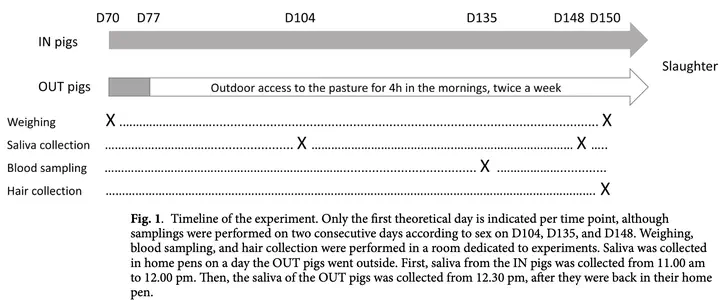
Conventional pig production systems are characterized by fully slatted floors and space restrictions, hindering pigs from foraging and roaming. In contrast, providing pigs with outdoor access allows them to express a wide range of behaviors, but might challenge their health. In this context, we hypothesized that giving pigs regular outdoor access might lower stress exposure with positive impacts for health and welfare. A total of 145 male and 148 female pigs, housed in a conventional barn, were provided (OUT) or not (IN) with access to a grassy paddock twice a week from the age of 77 days to slaughter. The OUT pigs had lower salivary cortisol levels than the IN pigs. Regular access to a pasture also lowered the severity of body lesions. While it had no consequences on animal growth, it was associated with a reduced frequency of diarrhea in pigs. Despite lower leukocytes counts in the OUT pigs compared to the IN ones, higher proportion of the OUT pigs developed humoral response against L. intracellularis. Thus, providing regular access to a paddock for growing pigs had positive impacts on their health and welfare, with no consequence on their performance.